Airbnb has completely changed the way people travel by providing distinctive lodging and customized experiences all over the world in recent years. The platform gives hosts the chance to supplement their income by short-term renting out their properties. While being an Airbnb host can be exciting, it’s important to understand the complicated legal and regulatory environment that comes with running short-term rentals.
c
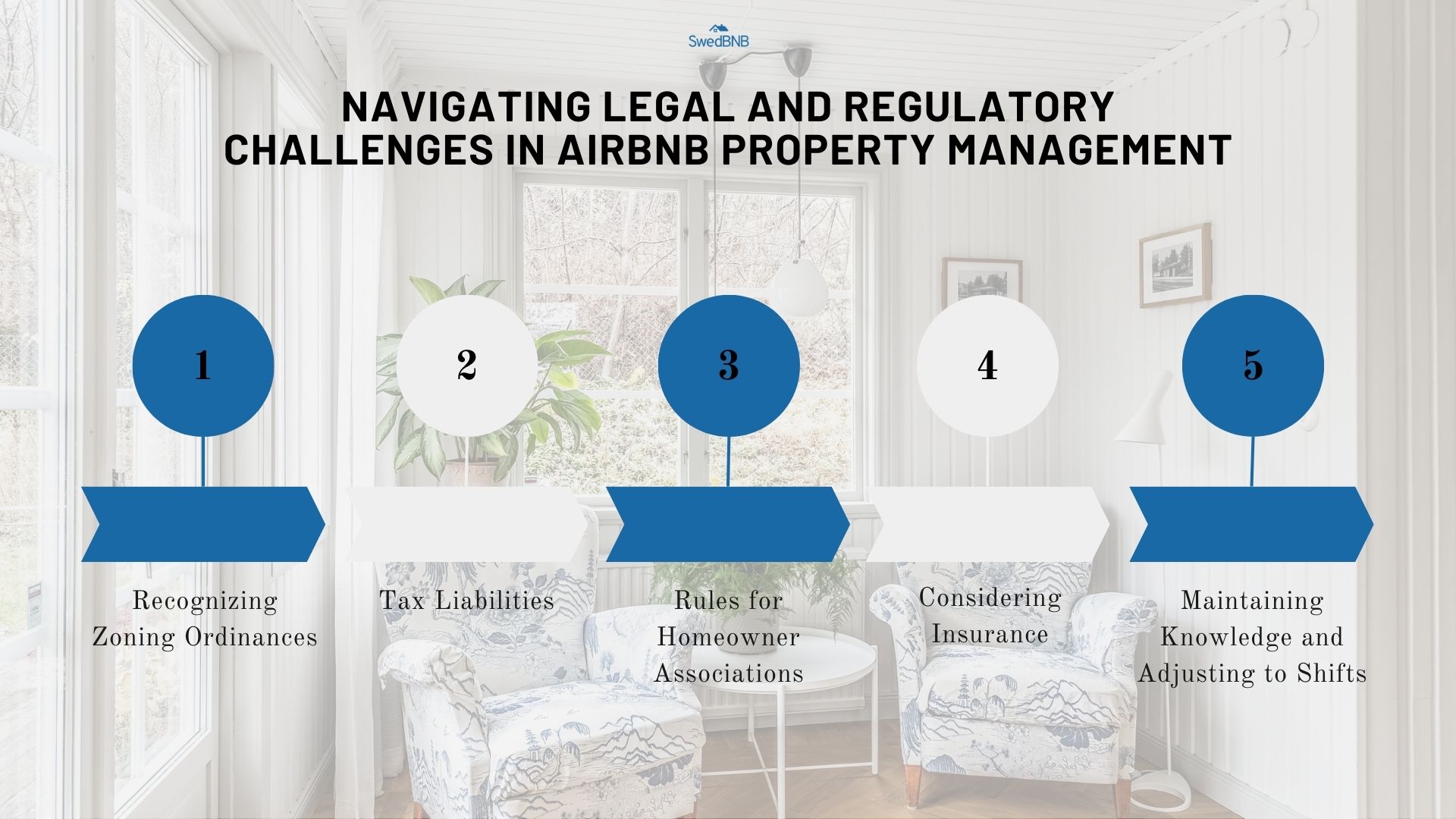
Recognizing Zoning Ordinances
Understanding local zoning laws is one of the first challenges hosts face. Zoning regulations set forth the permissible uses of properties, including the circumstances and acceptance of short-term rentals. While some cities may require hosts to obtain permits or licenses, others may have strict regulations that forbid short-term rentals completely. In order to avoid penalties or legal ramifications, hosts must thoroughly investigate and abide by local zoning regulations.
c
Tax Liabilities
For Airbnb hosts, taxes is yet another crucial factor to take into account. In addition to income tax on rental income, hosts may be required by local laws to collect and remit occupancy taxes. For taxation purposes, hosts should also maintain thorough records of their rental revenue and expenses. Hosts can make sure they are in compliance with all applicable laws and understand their tax obligations by speaking with a tax professional.
c
Rules for Homeowner Associations
It’s crucial for hosts who own real estate in planned communities or condominiums to comply with homeowner association (HOA) regulations. Short-term rentals are subject to many HOA rules and regulations, which may include restrictions on the length of the rental or guidelines for visitors. In order to prevent disputes or penalties, hosts should study the bylaws of their HOA and obtain permission from the group prior to listing their property on Airbnb.
c
Considering Insurance
`An additional important component of Airbnb property management is insurance. For short-term rentals, standard homeowners’ or renters’ insurance policies might not offer sufficient coverage. In addition to informing their insurance company, hosts should enquire about specific insurance options for short-term rentals, such as liability coverage and defense against visitor theft or property damage. In the case of mishaps or property damage, hosts may be left exposed if they do not have adequate insurance coverage.
c
Maintaining Knowledge and Adjusting to Shifts
The legislative and regulatory environment pertaining to Airbnb and short-term rentals is ever-changing. Updates on local laws and regulations that may affect their capacity to conduct business lawfully should be kept hosts aware. This could entail going to neighborhood gatherings, joining host associations in the area, or, if needed, obtaining legal counsel. To successfully navigate the legal challenges of Airbnb property management, one must be proactive and flexible.
c

In summary, managing short-term rentals entails understanding and adhering to legal and regulatory requirements, even though being an Airbnb host offers exciting opportunities. Hosts can reduce risks and guarantee a smooth and lawful operation by being informed about zoning laws, tax obligations, homeowner association regulations, and insurance considerations. To successfully navigate the constantly shifting world of Airbnb property management, one must be knowledgeable and flexible.
Leave a Reply